Brustchirurgie10

Sie haben sich erfolgreich abgemeldet.


Noch nicht registriert?
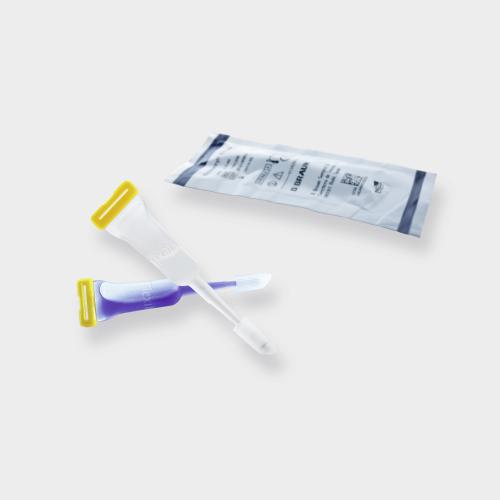
Histoacryl® Flexible
Histoacryl® Flexible ist ein klinisch bewährter Gewebekleber für den spannungsarmen Verschluss von Hautwunden. Diese einzigartige und vielseitige Butyl-Cyanoacrylat-Lösung eignet sich sowohl für kleine als auch für lange Inzisionen bis zu 25 cm.1–3 Die schnelle Polymerisation und schmerzlose Applikation unterstützen einen sicheren, effektiven Wundverschluss und eine schnellere Genesung.6 Darüber hinaus wirkt Histoacryl Flexible als phyikalische Barriere gegen das Eindringen von Keimen.4-5

Ermöglicht den Verschluss von Inzisionen bis zu 25 cm (belegt durch In-vitro-Daten).1–3
Weniger Schmerzen im Vergleich zu Nahtmaterial.6
Kürzere Genesungszeit der Patientinnen und Patienten nach dem Wundverschluss.6
Verkürzte Hautverschlusszeit im Vergleich zu Nahtmaterial.8
Wirkt als physikalische Barriere gegen das Eindringen von Keimen.4,5
Kann bei Raumtemperatur < 25 ºC gelagert werden.9
Keine Polymerisation in der Spitze und in der Ampulle nach Anbruch.
Eingesetzt in mehr als
0
Ländern rund um den Globus
Mehr als
0
Jahre Erfahrung
Für Inzisionen bis
0
Zentimeter
Ermöglicht den Verschluss von Inzisionen bis 25 cm; Einsatz bei einer Vielzahl von chirurgischen Verfahren.1–3
Patientinnen und Patienten berichten von weniger Schmerzen im Vergleich zu herkömmlichem Nahtmaterial. Die Genesungszeit nach dem Wundverschluss mit Histoacryl® Flexible ist signifikant kürzer im Vergleich zu chirurgischem Nahtmaterial.6
Dieser Gewebekleber von B. Braun ermöglicht im Vergleich zum Nähen einen schnelleren Hautverschluss und optimiert so die Effizienz im Operationssaal.8
Ja. Studien4 haben gezeigt, dass Histoacryl® Flexible als physikalische Barriere gegen das Eindringen von Keimen wirkt, solange der Klebefilm intakt bleibt.5 In-vitro-Test zur Beurteilung der Keimbarriere durch Histoacryl® Flexible während 7 Tagen gegen folgende Bakterien: Staphylococcus aureus, Staphylococcus epidermidis, Escherichia coli, Pseudomonas aeruginosa, Enterococcus faecium, Brevundimonas diminuta und Candida albicans.
Der Kleber ist gebrauchsfertig, wird bei Raumtemperatur (unter 25 °C) gelagert und polymerisiert nach Anbruch nicht, sodass eine zuverlässige und einfache Anwendung gewährleistet ist.9
Eine dünne Schicht genügt, um eine optimale Haftung zu gewährleisten.
Zur einfachen visuellen Beurteilung der aufgetragenen Schicht ist der Gewebekleber blau eingefärbt.
Es handelt sich um einen sterilen, flüssigen topischen Hautkleber aus Butyl-Cyanoacrylat. Seine Formulierung enthält einen Weichmacher, der für zusätzliche Flexibilität sorgt.
Breites Anwendungsspektrum
Brustchirurgie10

Kaiserschnitt11

Zirkumzision12

Platzwunden13–15

Implantation eines zentralvenösen Portsystems8

Plastische und rekonstruktive Eingriffe im Gesicht16,17

Pannikulektomie und Abdominoplastik18

Pädiatrische Nagelbettverletzung19

Reparatur von Einrissen der Dammhaut nach vaginaler Geburt6

Hüft-Totalendoprothese20

Kein Wundverband nötig8

Duschen möglich8

Kein Termin zur Entfernung erforderlich, da der Kleber sich innerhalb von 4–8 Tagen von selbst ablöst7
Sie werden an eine zuständige Ansprechperson weitergeleitet, die sich schnellstmöglich mit Ihnen in Verbindung setzt.